
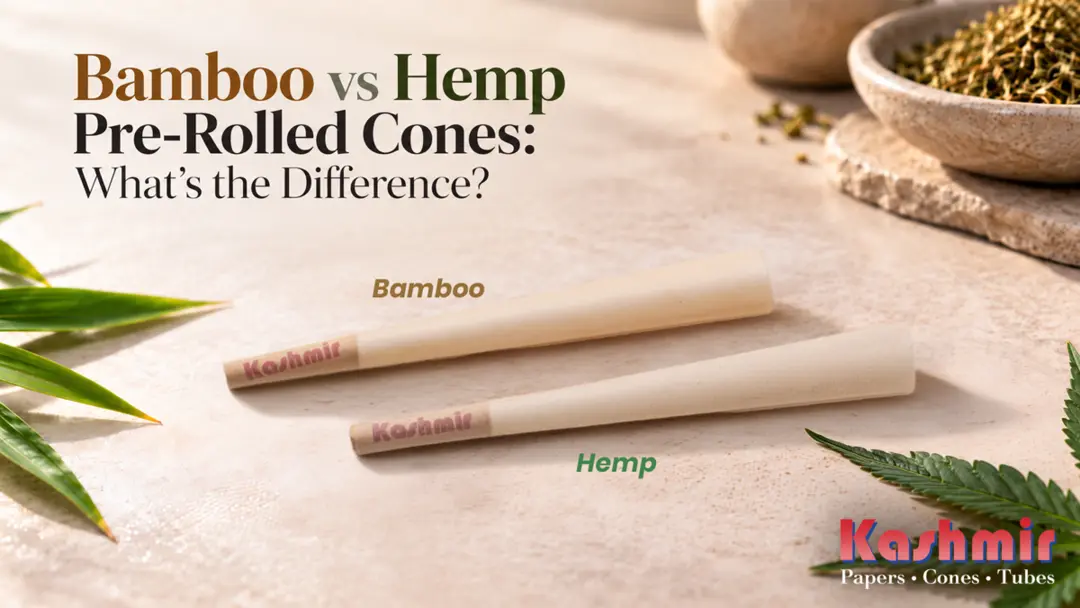
Bamboo vs Hemp Pre-Rolled Cones: What’s the Difference?
Bamboo and hemp pre-rolled cones may look similar, but the paper can feel, taste and burn differently.
Bamboo paper is generally lighter and smoother, with a more neutral paper presence. Hemp tends to have more texture and a slightly earthier character. Burn behavior can differ too, although paper weight, construction and packing matter just as much as the plant fiber itself.
Those differences are what make the comparison useful.
If you are choosing between bamboo pre rolled cones and hemp cones, the real question is not simply which one feels better in your hand. It is how the paper behaves from the moment you fill the cone to the point where it burns.
What Bamboo Cones Are Like
Bamboo paper is made from bamboo fiber that has been processed into a thin rolling sheet.
One of its main advantages is that it can be made quite light without automatically becoming unusably fragile. That gives bamboo cones a fine, flexible feel while still leaving enough structure for filling.
Bamboo paper is also commonly described as having a relatively neutral taste compared with more fibrous papers. That means the paper itself tends to stay more in the background rather than adding a noticeable earthy note. Several rolling-paper guides describe bamboo this way, although the exact taste still depends on how the finished paper is made.
That combination, light paper, smooth texture and relatively low paper presence, is what makes bamboo appealing.
As an example, Kashmir positions its bamboo papers and cones around thinness, flexibility and strength. That is one product interpretation of the broader characteristics associated with bamboo paper, rather than a definition of all bamboo cones.
What Hemp Cones Are Like
Hemp paper usually feels more textured.
That extra surface feel can make the cone easier to grip while filling, especially for someone who finds very thin paper a little delicate.
Hemp also tends to have slightly more body than many bamboo papers. It does not have to be thick, but the fibers often give the sheet a firmer, more tactile feel.
Taste is another difference worth considering.
Hemp papers are often described as having a mild earthy or natural paper note. The effect is generally subtle, but it can be more noticeable than with very neutral, thin papers. Current rolling-paper guides commonly describe hemp as relatively neutral overall, but with more natural character than rice or some bamboo papers.
That does not make hemp better or worse.
Some people like that slightly fuller paper feel and do not mind a mild paper presence. Others prefer the paper to stay as unobtrusive as possible.
Bamboo vs Hemp: The Main Differences
The comparison is easier to understand when you look at the paper rather than the cone shape.
| Characteristic | Bamboo Cones | Hemp Cones |
| Paper feel | Light, smooth and flexible | More textured and slightly firmer |
| Thickness | Often made relatively thin | Commonly light to medium in feel |
| Grip | Smoother surface | More tactile grip |
| Paper taste | Usually more neutral | Can have a mild earthy note |
| Strength | Thin fiber can still retain useful strength | Naturally durable with more body |
| Burn behavior | Often positioned as slow and even | Often positioned as steady and even |
| Best suited to | Someone who wants lighter paper presence | Someone who prefers texture and grip |
These are general paper tendencies, not fixed specifications for every product.
Manufacturing still matters.
Two bamboo papers from different manufacturers may not have identical thickness or burn behavior, just as two hemp papers may not feel exactly alike.
How Burn Rate Really Compares
This is where the comparison needs some care.
You will often see simple claims that one fiber burns slower than another. In practice, the fiber name alone does not tell you enough.
Paper thickness, density, porosity, embossing, gum, airflow and how evenly the cone is packed all affect the burn. A recent technical review of rolling-paper materials makes this point directly: burn behavior is driven by the engineering of the finished sheet rather than fiber identity alone.
That means it is safer to say that both bamboo and hemp can be made into slow, even-burning papers, rather than claiming bamboo always burns slower or hemp always burns more evenly.
Still, the paper feel can influence how the cone behaves in use.
A very light bamboo sheet introduces less paper mass than a heavier paper. A more textured hemp sheet may have a little more body and structure. Those differences can contribute to burn characteristics, but they do not work independently of construction.
As an example, Kashmir describes both its bamboo and organic hemp ranges as designed for slow, even burning. That tells us something about those specific products, not a universal rule about the two fibers.
Taste Is Another Real Difference
This point was missing from the earlier draft.
The paper itself can contribute some flavor, even when it is unflavored.
Bamboo is usually described as relatively neutral, especially when made into a thin sheet.
Hemp often has a mild earthy paper character.
For some people, that difference is barely noticeable. For others, it matters enough to influence which paper they prefer.
Thickness also plays a role here.
A thinner sheet generally contributes less paper material overall, while a heavier sheet can make the paper more noticeable. That is why material and thickness should be considered together rather than treating taste as a property of fiber alone.
If keeping paper flavor as low as possible is important to you, a thin bamboo cone may be appealing.
If you prefer a little more paper texture and do not mind a mild earthy note, hemp may suit you better.
Handling and Strength
The difference in handling becomes obvious before either cone is filled.
Bamboo tends to feel lighter and smoother.
Hemp feels more tactile.
That extra texture can make hemp easier to hold securely while filling and tamping. Bamboo, on the other hand, feels finer and more flexible.
Strength should not be confused with thickness.
A thin bamboo sheet can still be strong enough for normal use. Hemp can feel more substantial without necessarily being a heavy paper.
And all pre-rolled cones remain delicate products.
They can bend, crease or tear if handled roughly, regardless of whether they are made from bamboo or hemp. Quality paper should handle normal filling and packing, but neither material should be described as rigid or resistant to pressure.
Does One Material Have a Clear Advantage?
Not across every category.
Bamboo has an advantage when someone wants a lighter paper feel and relatively neutral paper taste.
Hemp has an advantage when texture and grip are more important.
Burn rate is less useful as a deciding factor because both materials can be engineered for steady, slow burning.
Taste is more noticeable as a distinction, although it is still subjective.
Handling is probably the easiest difference to feel immediately.
So the choice is really about which combination matters more to you:
lighter paper and a more neutral profile, or more texture and a slightly fuller paper presence.
Bamboo vs Hemp Cones in Practice
If you are new to both, it can help to think of them this way.
Bamboo tends to stay more in the background. The sheet feels thin, smooth and light, and the paper taste is generally less pronounced.
Hemp makes itself a little more noticeable. It has more texture in the hand and can contribute a mild earthy note.
As an example, Kashmir’s bamboo products emphasize thinness and flexibility, while its organic hemp cones emphasize unbleached hemp paper, texture and embossed construction. Those product details illustrate the broader differences without defining the entire category.
That is the kind of role brand examples should play in this article: supporting the explanation, not driving it.
Which One Should You Choose?
Choose bamboo if you prefer a lighter, smoother paper with less noticeable paper presence.
Choose hemp if you prefer more grip, slightly more body and do not mind a mild earthy character from the paper.
If burn speed is your main concern, compare the actual product specifications rather than choosing by fiber name alone.
A well-made bamboo cone and a well-made hemp cone can both deliver a slow, even burn.
The more meaningful differences are usually paper feel, taste and handling.
Final Takeaway
Bamboo and hemp cones share the same basic pre-rolled format, but the paper experience is different.
Bamboo is generally lighter, smoother and more neutral in taste.
Hemp tends to be more textured, slightly fuller in feel and may contribute a mild earthy note.
Burn behavior matters too, but it is influenced by more than fiber alone. Paper weight, construction and packing all affect the final result. So instead of asking which material is universally better, compare the characteristics you are most likely to notice:
How the paper feels. How noticeable it tastes. And how the finished cone is designed to burn.