
What to Consider When Choosing Flavored Rolling Papers
Flavor is usually what catches your attention first, but it isn’t the only thing worth checking on a pack of flavored rolling papers.
The flavor has to suit your preference, of course. But the paper underneath it still matters. Material, thickness, size, gum, and handling can all influence what the paper is like to roll and use.
So, instead of looking for one universally best flavored rolling paper, it makes more sense to compare a few practical characteristics before choosing.
What Are Flavored Rolling Papers?
Flavored rolling papers are made with an added flavor or aroma that distinguishes them from regular, unflavored papers.
The flavor can be fruit-inspired or based on other profiles, depending on the manufacturer. But underneath that added flavor is still a rolling paper with its own material, thickness, dimensions, texture, and adhesive.
That’s an easy detail to overlook.
Two flavored papers can sound similar based on their flavor names while being quite different as papers. One might be thin and lightweight, while another could use a different fiber or have a different size.
The flavor tells you one thing about the product. The paper specifications tell you the rest.
Flavor Is the First Consideration
There isn’t an objectively “best” rolling-paper flavor because taste is personal.
A fruit flavor that’s appealing to one person may not interest someone else. Rather than ranking flavors, start with the profiles you already tend to enjoy.
It’s also useful to consider how noticeable you want the added flavor to be. Some people want flavor to be an obvious part of the experience, while others may prefer something more subtle.
This is where the actual product description becomes more useful than the flavor name alone. Look for information about how the manufacturer describes the flavor rather than assuming that every product carrying the same fruit name will taste identical.
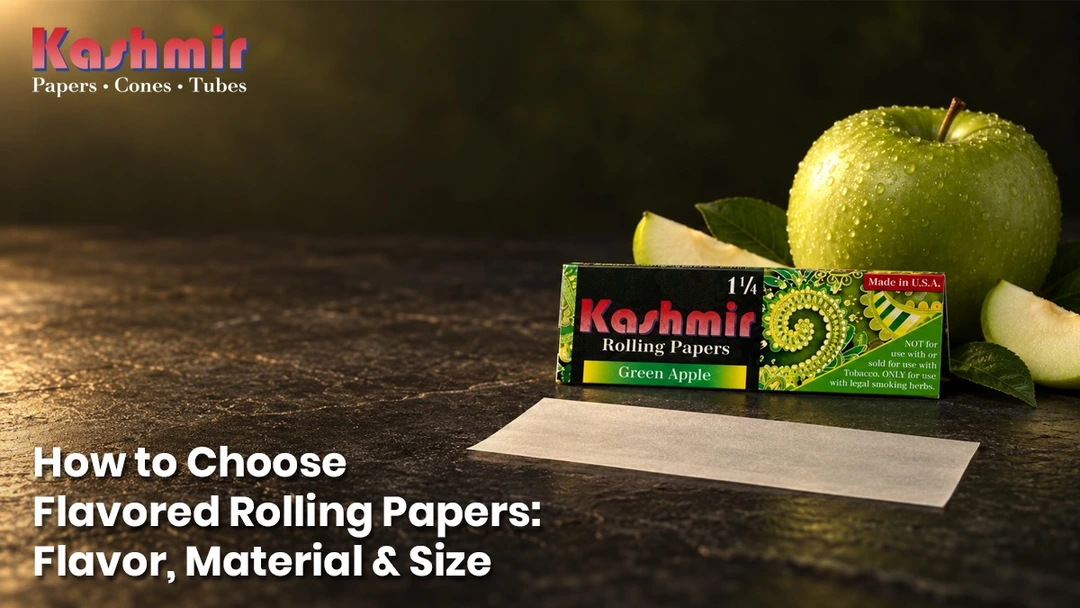
Kashmir’s current flavored rolling-paper range, for example, includes a Green Apple Flavored Rolling Paper in 1¼ size. Kashmir describes it as adding a hint of green apple flavor rather than positioning the paper solely around an intense flavor.
Flavored Papers vs. Regular Papers
The main difference is straightforward: flavored papers intentionally add a flavor profile, while regular papers don’t.
That doesn’t mean everything else about the papers is different.
Both can be made in thin constructions, use different paper fibers, come in different sizes, and use different types of gum. Flavor is an additional characteristic rather than a replacement for those basic paper specifications.
If you want the paper to contribute an added flavor, a flavored option makes sense. If you’d rather have no intentional flavor added by the paper, an unflavored paper is the more direct choice.
The decision then moves to the other characteristics of the sheet.
Check the Paper Material
Once you’ve found a flavor that interests you, check what the actual paper is made from.
Rolling papers can use hemp, rice, bamboo, wood pulp, or combinations of paper fibers. Material affects characteristics such as texture, flexibility, and how the sheet feels while rolling.
This is especially relevant with flavored smoking papers because the flavor name can easily become the main focus of the packaging.
For example, Kashmir’s Green Apple paper is hemp-based and is described on the current product page as ultra-thin and unbleached. That tells you considerably more about the paper than “Green Apple” alone.
If paper material matters to you, check it separately rather than assuming the flavor indicates anything about the sheet underneath.
Consider Paper Thickness
Thickness changes how a rolling paper feels in your hands and how much paper surrounds the roll.
A thin or ultra-thin sheet uses less paper material than a heavier one. It can also require a little more control while rolling because there is less body to the sheet.
A somewhat heavier paper may feel easier to manipulate for someone who prefers a firmer sheet.
Neither characteristic makes a flavored paper universally better. The important point is that flavor and thickness are separate choices.
If two papers have appealing flavors, thickness can become one of the practical differences that helps you decide between them.
Look at the Gum
The gum strip doesn’t receive nearly as much attention as flavor, but it has a simple and important job: keeping the paper sealed after it’s rolled.
Check the product information to see what type of adhesive is used rather than assuming every flavored paper uses the same gum.
This can be particularly useful if you’re already comparing paper materials and processing details.
Kashmir’s Green Apple 1¼ papers, for example, currently list a natural sugar gum adhesive alongside their unbleached, ultra-thin paper construction.
It’s a small specification, but one worth checking before buying.
Choose a Size That Fits How You Roll
Flavor doesn’t change the amount of space you need from a rolling paper.
That’s why size should be considered independently.
Common rolling-paper formats include 1¼ and King Slim, among others. A larger paper gives you more rolling area, while a smaller format can make more sense when that extra length isn’t needed.
Don’t confuse paper size with pack quantity either. A size such as 1¼ describes the format of the individual sheet; the number of leaves tells you how many papers are included.
Exact dimensions and quantities should always be checked on the individual product.
Kashmir’s current Green Apple flavored rolling paper is offered in 1¼ size with 32 leaves per booklet, according to the product specifications.
Don’t Overlook Handling
A flavored paper still needs to be comfortable to roll.
Thickness, texture, flexibility, and size all contribute to handling. Someone accustomed to ultra-thin papers may prefer a very lightweight sheet, while another person may find a paper with a little more body easier to control.
This is another reason choosing purely by flavor can be limiting.
The flavor might get you interested in a particular paper. Its physical characteristics determine whether the sheet itself suits the way you roll.
What Should You Check Before Choosing?
A useful way to compare flavored papers is to look at the complete product rather than the flavor name on its own.
Start with the flavor profile you want. Then check the paper material and thickness to understand the type of sheet you’re getting. Confirm the size fits how you normally roll, and look at the gum and other listed specifications before making your choice.
That approach also makes the phrase best flavored rolling papers more useful. The “best” option isn’t necessarily whichever flavor sounds most interesting. It’s the one where the flavor and the paper characteristics both fit your preferences.
Kashmir’s Green Apple flavored rolling paper is one example of how those details come together: a fruit-flavored paper built on an ultra-thin, unbleached, hemp-based sheet in a 1¼ format.
Flavor gets noticed first. But material, thickness, size, gum, and handling are what give you the fuller picture of what you’re actually buying.