
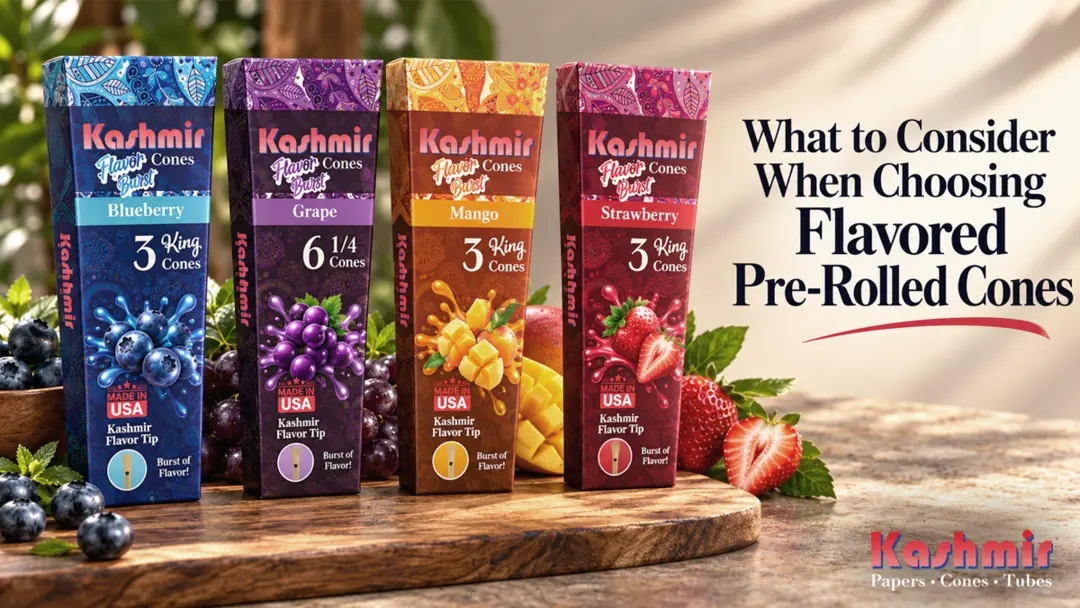
What to Consider When Choosing Flavored Pre-Rolled Cones
Flavored pre-rolled cones add something that an ordinary paper cone does not: an intentional aroma or taste profile built into the product.
That sounds straightforward, but “flavored cone” can describe several different approaches. The flavor may be applied to the surface of the paper, incorporated into the sheet during production, or introduced through another flavored component. The method matters because it can affect how strong the aroma seems, where you notice it, and how evenly that character carries through the paper.
That makes choosing a flavored cone more interesting than simply deciding whether Mango sounds better than Blueberry.
The useful questions are how the flavor is delivered, how strong you want it to be, whether you want the paper itself to be noticeable, and whether the flavor complements rather than overwhelms what you are putting inside the cone.
How Does Flavor Get Into a Pre-Rolled Cone?
There is no single method used across every flavored paper.
One common approach is a surface treatment, where a flavored solution is applied after the base paper has been made. Because the flavor sits closer to the surface, the aroma or taste can be relatively noticeable at first. The exact strength depends on how much treatment is applied and how evenly it is distributed across the sheet.
Another approach is to incorporate flavor more deeply into the paper during manufacturing or through an infusion process. In that case, the flavor is distributed through more of the sheet rather than simply sitting on its outer surface. Industry descriptions suggest that this can produce a more integrated or consistent flavor profile, although the actual result still depends on the formula and manufacturing method.
Some products take a completely different approach by putting the flavor in the tip or another component rather than the paper itself. That separates the flavor system from the main paper sheet and creates a different experience from a cone where the paper itself carries the flavor.
For shoppers, this is useful information. Two cones can both say “grape” on the package while delivering that flavor in different ways.
What Does Adding Flavor Actually Change?
The obvious change is aroma.
Before a flavored cone is even filled, the paper may have a recognizable fruit or sweet scent. For many people, that aroma is part of the appeal because it makes the cone feel different from a neutral paper from the moment the package is opened.
Taste can also be affected, but expectations need to be realistic.
A flavored paper usually adds a note to the overall experience rather than turning everything inside the cone into the flavor printed on the package. The strength can range from subtle to pronounced depending on the flavoring method and concentration. Some manufacturers emphasize aroma, while others aim for a more noticeable taste from the paper itself.
That distinction matters when choosing.
Someone looking for only a light fruit note may find an intensely treated paper distracting. Someone deliberately buying a flavored cone may be disappointed if the aroma is barely noticeable.
There is no universally correct intensity. The better choice depends on how much presence you want the paper to have.
The Advantages of Flavored Cones
The main advantage is variety.
A standard unflavored cone is deliberately neutral in concept. A flavored cone lets someone introduce another sensory element without changing the basic pre-rolled format.
That can make familiar paper styles feel different from one pack to another. A tropical profile such as Mango creates a different impression from a berry-style Blueberry or Strawberry cone, while Grape has its own recognizable direction.
Flavor can also be useful for someone who enjoys rotating between profiles rather than using the same paper every time. Instead of changing the cone shape or rolling technique, the variation comes from the paper itself.
There is also a visual and aromatic aspect to flavored products that plain paper does not offer. Opening a pack and immediately recognizing the intended fruit profile is part of the product experience, even before the cone is filled.
None of these are performance advantages in the same sense as paper strength or construction. They are sensory advantages, and that is where flavored cones should be evaluated.
There Are Trade-Offs Too
Adding flavor changes the paper from a neutral wrapper into an active part of the experience, and not everyone wants that.
The biggest trade-off is that the paper can become more noticeable.
Someone who prefers the contents of the cone to provide nearly all of the aroma and taste may find a strongly flavored paper distracting. The more prominent the flavor treatment, the more likely it is to compete with rather than simply complement what is inside.
There is also the issue of consistency.
Surface-treated papers may not necessarily deliver flavor in exactly the same way as papers where the flavor is incorporated more deeply into the sheet. Flavor intensity can also change during storage as aromatic compounds fade over time, particularly if the packaging is repeatedly opened or stored poorly.
That makes product freshness and packaging more relevant for flavored papers than they might initially seem.
A fruit name on the package tells you the intended profile. It does not tell you how strong or persistent that flavor will actually be.
Flavor and Paper Construction Still Work Together
Flavor does not exist separately from the paper carrying it.
The sheet still has a fiber type, paper weight, surface texture, gum and manufacturing process. Those characteristics affect how the cone handles and burns regardless of whether flavor has been added.
The flavor treatment itself can also interact with the paper. A surface coating is not the same thing as flavor incorporated into the sheet, and a treated paper may feel somewhat different depending on how much material has been applied. Industry discussions of flavored papers distinguish between coated, infused and tip-based flavor systems precisely because they do not behave identically.
This does not mean a shopper needs to understand the chemistry of the paper before buying it.
It simply means that the most useful flavored-cone product descriptions should tell you more than a fruit name.
If a manufacturer explains how the flavor is added, what the base paper is made from, or whether the paper is embossed or otherwise treated, that information gives you a clearer idea of what you are buying.
How Should You Choose Between Mango, Blueberry, Grape and Strawberry?
Once the construction is understood, flavor preference can stay simple.
Mango usually sits in the tropical-fruit direction. Blueberry and Strawberry fall more naturally into berry-style profiles, although the exact sweetness and intensity depend on the individual product. Grape is its own familiar fruit profile and often has a more distinctive aromatic identity.
There is little value in ranking them.
Flavor is inherently subjective.
A person who generally prefers tropical flavors may gravitate toward Mango. Someone who likes berry profiles may be more interested in Blueberry or Strawberry. Grape may appeal simply because it is already a familiar flavor choice.
The more useful consideration is intensity.
A subtle Mango cone and a heavily flavored Mango cone could create noticeably different experiences even though the fruit name is identical. If product information describes the strength or style of the flavor, that can be more useful than the name alone.
Flavored vs Unflavored Cones
The difference between flavored and unflavored cones is not really about quality.
It is about how active you want the paper to be in the overall experience.
An unflavored paper is intended to stay relatively neutral. Its job is primarily structural: hold the material, seal properly and burn as designed.
A flavored cone deliberately asks the paper to do something else as well.
It contributes aroma, taste or both.
That can be an advantage if the added flavor is something you specifically want. It can be a disadvantage if you prefer the paper to remain as unobtrusive as possible.
So the choice is not “flavored is better” or “unflavored is better.”
It comes down to whether you want the paper itself to have a noticeable character.
Does Flavor Affect Burn?
Flavor alone does not give us enough information to predict burn behavior.
How a cone burns still depends on the underlying paper: its weight, density, porosity, construction, surface treatment and how evenly the cone is packed.
However, adding material to a paper can potentially change its properties, which is another reason flavoring method matters. A heavily surface-treated sheet is not technically identical to an untreated version of the same paper. Research and manufacturing discussions of flavored papers note that flavor coatings and infused compounds have to be balanced against normal paper performance.
That does not mean flavored cones inherently burn poorly.
It means the finished product needs to be evaluated as a whole.
A well-made flavored cone should balance the added sensory profile with the paper characteristics expected from a functional pre-rolled cone.
What Should You Look For Before Choosing?
When considering flavored pre rolled cones, the most useful place to start is actually the flavoring information.
Does the manufacturer tell you whether the flavor is infused, coated or otherwise added to the paper? Does it describe the flavor as subtle or pronounced? Is the cone genuinely flavored, or is the product primarily scented?
Then look at the underlying paper.
Fiber type, weight and construction still matter because the cone has to function as paper first.
Finally, consider whether you want the flavor to complement what you put inside or become one of the more noticeable elements of the experience.
That question is more useful than simply searching for the “best flavored cone.”
Kashmir Flavored Cones as an Example
Kashmir currently offers fruit-flavored pre-rolled cones including Mango, Blueberry, Grape and Strawberry across its flavored cone range.
Those products are useful examples of how a brand can build variety around flavor without changing the basic pre-rolled-cone format. The choice between them is primarily about the fruit profile rather than one flavor being objectively superior.
For someone looking at Kashmir specifically, the individual product description is the right place to check the paper details and the way the particular flavor is presented.
The important point for the article is broader: Kashmir is one example of a category where the flavor system, paper construction and intended flavor intensity should all be considered together.
Final Thoughts
Flavored pre-rolled cones are not simply ordinary cones with a fruit name printed on the package.
The flavor has to be introduced somewhere, and the way it is delivered can affect how noticeable and consistent that flavor feels. Some papers use surface treatments, others incorporate flavor more deeply into the sheet, and some products deliver flavor through another component entirely.
The main advantage is obvious: flavored cones add variety and give the paper its own sensory character.
The trade-off is just as important. Once flavor is introduced, the paper becomes more noticeable, and a strong profile may compete with rather than complement what is inside the cone.
That is why choosing flavored pre rolled cones starts with one question:
How much flavor do you actually want the paper to contribute?
Once you know that, choosing between Mango, Blueberry, Grape, Strawberry or an unflavored cone becomes much easier.