
Pre-Rolled Tubes vs Pre-Rolled Cones: Key Differences
At first glance, pre-rolled tubes and cones seem to do the same job. Both are empty paper shells that come ready to fill, saving you the trouble of rolling a loose sheet of paper. But put the two side by side, and you’ll notice some differences.
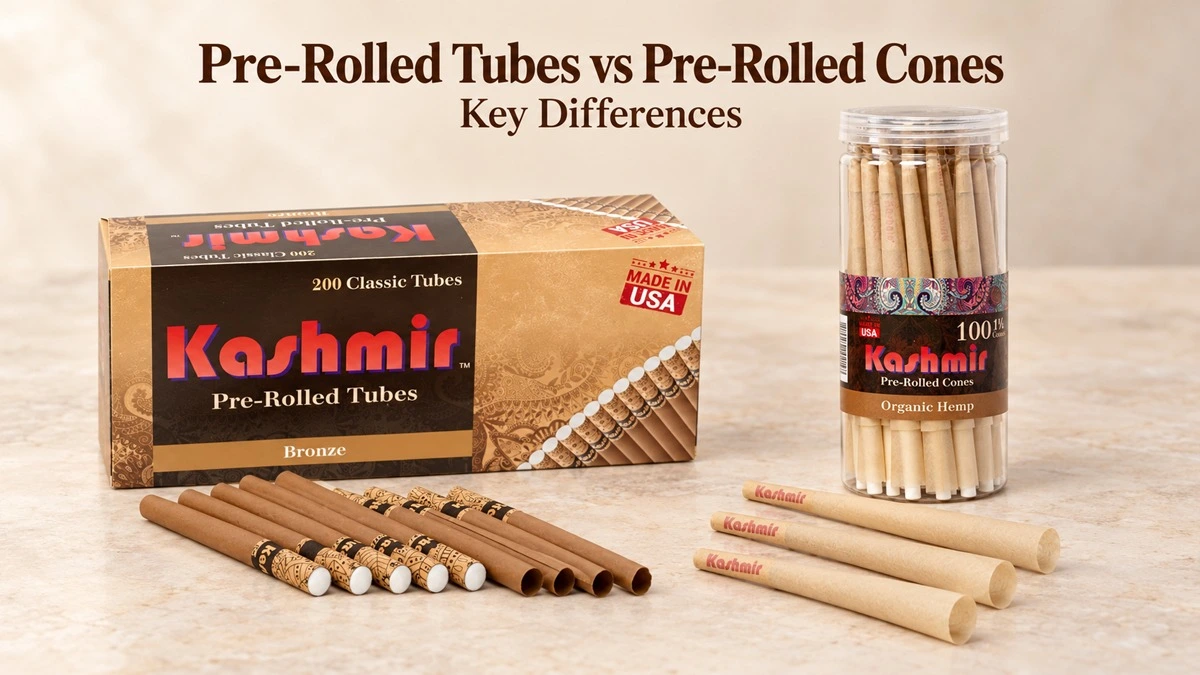
A tube is straight, usually with a filter already fitted at one end. A cone is wider at the opening and narrows toward a folded paper tip. That difference in shape affects how they’re filled, the equipment they work with, and how they’re handled.
If you’re buying either format for the first time, it’s useful to know what you’re getting. A tube isn’t simply a cone without the taper, and the two aren’t always interchangeable.
What Exactly Are Pre-Rolled Tubes?
Think of a pre-rolled tube as a paper cylinder that’s already been shaped and sealed. One end is open for filling, while the other generally contains a manufactured filter. The paper stays roughly the same width along its length, giving it a straight appearance.
This design works particularly well with compatible injector machines. Rather than filling a paper shell from a wide opening, an injector pushes material into the tube through its open end. It’s a different process from working with a cone, and one that depends on having the right equipment.
Not every tube is made from the same paper. Some use hemp fibers, others use unbleached paper, and colored varieties are available too. Filter length and tube dimensions can also differ between products.
You may see these products described as rolling paper tubes, empty pre rolled tubes, or pre rolled paper tubes. The names vary, but they generally refer to the same straight, ready-made format.
How Are Pre-Rolled Cones Different?
With a cone, the shape changes gradually from one end to the other. The opening is wider, while the opposite end is narrow and usually fitted with a folded paper tip.
That wider opening makes the cone convenient to fill by hand. There’s enough room to add material from the top, although distributing it evenly still takes some attention. The paper has already been rolled into its tapered shape, so you don’t have to form the cone yourself.
One detail that sometimes causes confusion is the tip. A typical pre-rolled cone has a folded paper tip rather than the manufactured filter commonly found in tubes. The tip supports the narrow end and helps prevent loose material from passing through, but it shouldn’t be confused with a filter designed to capture smoke particles.
Cones also come in different lengths and paper varieties. You’ll find smaller 1¼ cones, longer King Size options, and materials ranging from hemp to bamboo and unbleached paper. The tapered shape remains the same basic idea, even when those details change.
The Biggest Difference Is How They’re Filled
Imagine you’ve bought a box of tubes and a jar of cones. Both are empty, but the way you prepare them won’t necessarily be the same.
With tubes, an injector can take care of much of the filling process. The tube fits over the appropriate part of the machine, which transfers material into the paper shell. This is why the size of the tube matters. If it doesn’t fit your injector properly, the convenience you were expecting may disappear.
Cones are commonly filled through their wider opening, either manually or with equipment designed for cones. Their tapered shape means there isn’t the same amount of room throughout the paper. Material needs to settle toward the narrower section without leaving large gaps or becoming excessively compressed.
Neither approach is automatically easier for everyone. Someone who already uses an injector may prefer the routine of filling tubes. Someone who doesn’t own that equipment may find a cone more convenient because it can be filled without a machine.
It’s a practical distinction, and probably the most useful one to consider before choosing between the two.
What About the Filter and Paper Tip?
The ends of these products deserve a closer look because they’re built differently.
Most pre-rolled tubes come with a manufactured filter. Depending on the product, the filter may vary in length and construction. It forms part of the tube’s straight design, so you generally don’t need to add a separate tip before filling it.
Cones usually have a folded paper tip at the narrow end. You’ll sometimes hear this called a crutch. Its job is largely structural: it helps the cone keep its shape and creates a barrier against loose material.
That distinction matters when comparing products. A paper tip isn’t necessarily designed to filter smoke in the same way as a manufactured filter, and neither should be assumed to remove the health risks associated with smoking.
If you have a preference for one type of end construction, check the product photographs and specifications rather than relying only on the words “pre-rolled.”
Does the Paper Material Make a Difference?
Yes, although paper material and paper shape are two separate things.
Hemp paper can be used to make both tubes and cones. Unbleached paper is also available in both formats. Choosing one material doesn’t automatically mean choosing one shape.
What changes between individual products is the paper’s construction. Weight, texture, and flexibility can vary, and those differences become noticeable when handling an empty shell. A lighter paper may require a gentler touch, while a more substantial paper can feel firmer.
It’s tempting to assume that one material will always burn slower or taste better, but those aren’t reliable rules. Paper weight, construction, moisture, and how the shell is filled can all affect the result. The material name alone doesn’t tell the whole story.
For that reason, it makes sense to decide whether you want a tube or a cone first. Once you’ve settled on the format, you can compare the available paper options without mixing up two different decisions.
When Should You Choose Pre-Rolled Tubes?
If you already own a compatible injector, tubes are an obvious place to start. They’re designed around a straight shape, and many are made specifically for machine-assisted filling.
You might also prefer tubes because of their built-in filters. There’s no need to fold a separate paper tip, and the cylindrical body gives the finished product a uniform appearance.
The main thing to check is compatibility. Tube sizes aren’t universal, and an injector designed for one length or diameter may not work properly with another. Buying a large carton before checking that detail could leave you with a product that’s difficult to use.
Kashmir’s tube range includes organic hemp and unbleached options, along with colored varieties. The collection also includes different tube lengths, so checking the individual product specifications is worthwhile.
When Do Pre-Rolled Cones Make More Sense?
Cones are a good fit for someone who prefers a tapered shape or wants to fill a ready-made paper shell without using a tube injector.
Their wide opening makes manual filling possible, and the paper tip is already in place. That’s useful if you want to avoid rolling a cone from a flat sheet but still prefer to handle the filling yourself.
There’s a trade-off, though. Empty cones can crease or lose their shape if they’re handled roughly. The wider opening is particularly easy to bend, so keeping them in protective packaging until needed is sensible.
Size is another consideration. A compact cone may be enough for one person’s preference, while someone else may want a longer format. Rather than assuming a larger cone is always better, consider which size you’ll actually use.
Kashmir offers cones made from hemp, bamboo, unbleached paper, and other materials. These give shoppers different paper options within the same tapered format.
Choosing Between Tubes and Cones
There’s no need to make this decision more complicated than it is.
If you’re looking for a straight paper shell with a manufactured filter, particularly one you can use with a compatible injector, pre-rolled tubes are likely the better starting point. If you prefer a tapered shape, a folded paper tip, and a wider opening for filling, cones are the format to look at.
After that, the details become easier to compare. Check the dimensions, paper material, tip or filter construction, and packaging. Those specifications will tell you more about whether a particular product suits your needs than a broad claim that one format is better than the other.
Both formats remove the need to roll a loose sheet of paper. They simply approach the job differently. Understanding that difference is enough to make a more informed choice.