
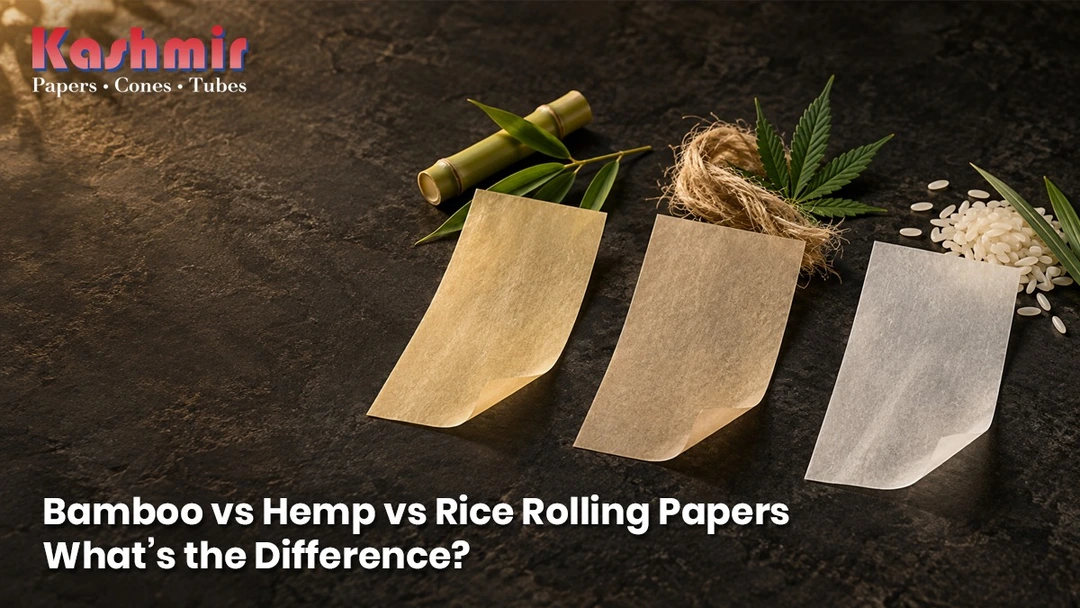
Bamboo vs Hemp vs Rice Rolling Papers: What’s the Difference?
Bamboo, hemp and rice papers can look similar in a booklet, but they don’t feel the same once you start rolling.
Bamboo is valued for combining a thin sheet with strong, flexible fibers. Hemp tends to have a little more texture and grip. Rice papers are usually chosen for their very thin, lightweight construction.
Those differences affect handling, how much paper surrounds the roll and, in some cases, how noticeable the paper feels during use.
So rather than asking which material is simply “best,” it makes more sense to look at what each one actually brings to the roll.
What Are Bamboo, Hemp and Rice Rolling Papers?
The names refer to the fibers used to make the paper.
Bamboo rolling papers use bamboo fiber, which can be formed into a thin sheet while retaining useful strength and flexibility.
Hemp rolling papers use fibers from the hemp plant. Hemp paper generally has more texture than very thin rice paper, giving it a slightly firmer feel in the hands.
Rice rolling papers are known for their lightweight construction. Kashmir’s current rice paper, for example, is an ultra-thin blend of rice, hemp and flax rather than rice fiber alone.
That distinction is more useful than treating all three as interchangeable “natural papers.” They have noticeably different physical characteristics, and those characteristics affect how they roll.
Bamboo Rolling Papers Explained
The clearest characteristic of bamboo paper is the balance between thinness and strength.
Kashmir’s Bamboo 1¼ Rolling Papers use unbleached bamboo fiber and are described as thin, flexible and naturally strong. The sheets measure 78 × 44 mm and use a natural gum line. Kashmir also describes them as slow and smooth burning.
That combination makes bamboo interesting for someone who wants a lighter sheet but doesn’t want the paper to feel overly delicate while shaping the roll.
Flexibility matters during rolling because the sheet needs to bend and form without feeling stiff. Strength matters for the opposite reason: an extremely delicate paper can require a much lighter touch.
Bamboo sits comfortably between those two needs.
Kashmir’s bamboo paper is also unbleached and chlorine-free, which gives the sheet its natural appearance rather than the brighter white associated with some processed papers.
So the practical appeal of bamboo isn’t simply that it comes from bamboo. It’s the combination of:
thin sheet + flexibility + useful strength + slow-burning construction.
Hemp Rolling Papers Explained
Hemp has a different feel.
Kashmir’s Organic Hemp 1¼ papers use organic hemp fibers in a lightweight, unbleached sheet. The company describes the paper as easy to shape, with enough texture and durability to provide grip during rolling.
That grip is one of hemp’s most useful characteristics.
Very smooth, ultra-thin papers can sometimes feel slippery or delicate in the fingers. Hemp generally has a little more body, which can make shaping and controlling the paper feel more straightforward.
Kashmir’s hemp sheets are also 78 × 44 mm in the 1¼ format, use plant-based gum and are designed for a slow, even burn.
For someone comparing paper mainly by handling, hemp offers a clear advantage: it tends to feel more substantial without needing to be a heavy paper.
That doesn’t mean hemp has to be thick. Kashmir’s own version is specifically described as lightweight. The difference is more about texture and feel than bulk.
Rice Rolling Papers Explained
Rice paper takes the lightweight idea further.
Kashmir’s Rice Rolling Papers are described as ultra-thin, using a blend of rice, hemp and flax fibers. The paper is intended to have very little flavor of its own and uses a natural gum adhesive.
The most noticeable difference is the amount of paper in the roll.
An ultra-thin rice sheet feels lighter than a more textured hemp paper, which appeals to people who want the paper itself to stay in the background as much as possible.
That thinness changes the handling, too.
Rice paper generally calls for a slightly lighter touch. Kashmir describes its sheet as delicate but crease-resistant, which captures the trade-off well: there’s less material in your hands, but the paper is still designed to hold its form while being rolled.
The company also describes its rice paper as slow and even burning with minimal paper taste.
In practical terms, rice paper is the option here that puts the strongest emphasis on thinness and a less noticeable paper presence.
Bamboo vs Hemp vs Rice: Side-by-Side Comparison
The differences become much clearer when you compare the finished papers rather than just the fiber names.
| Characteristic | Bamboo | Hemp | Rice |
| Main characteristic | Thin but strong and flexible | Textured with useful grip | Ultra-thin and lightweight |
| Handling | Flexible and easy to shape | Firmer feel, easier to grip | Requires a lighter touch |
| Paper feel | Thin with some strength | Slightly more body and texture | Very light and delicate |
| Construction | Unbleached bamboo fiber | Lightweight organic hemp fiber | Ultra-thin rice, hemp and flax blend |
| Paper presence | Low | Slightly more noticeable in the hand | Minimal |
| Burn description | Slow and smooth | Slow and even | Slow and even |
| Kashmir 1¼ size | 78 × 44 mm | 78 × 44 mm | 1¼ format |
| Good fit for | Thin paper without giving up strength | Rollers who like more grip | Rollers who prioritize thinness |
Kashmir’s current specifications support these distinctions across its bamboo, hemp and rice papers.
This is a much more useful comparison than simply saying all three are plant-based papers.
They share some qualities, especially lightweight construction and slow-burning positioning, but the feel in your hands is where the differences become obvious.
Burn, Thickness and Texture Compared
Thickness
Rice is the lightest-feeling option in this comparison because Kashmir specifically uses an ultra-thin construction.
Bamboo is also thin, but its stronger fiber gives the sheet more physical presence than a very delicate rice paper.
Hemp sits slightly differently. Kashmir’s hemp papers are lightweight, but their texture gives them a firmer, more tactile feel.
So if we reduce the comparison to how the sheets feel:
Rice → lightest and thinnest feel
Bamboo → thin with more strength
Hemp → lightweight with more texture and grip
That’s a more meaningful distinction than simply listing three fibers.
Texture
Texture is where hemp stands apart most clearly.
Hemp’s surface offers more grip, which can make controlling the sheet easier while forming the roll. Bamboo feels more flexible and smooth while still retaining strength. Rice feels finer and more delicate because of its ultra-thin construction.
None of those textures is automatically better.
They simply suit different hands.
Burn
All three Kashmir paper types are positioned around a slower, even or smooth burn. (Kashmir420)
That means burn speed alone isn’t the strongest reason to choose one over another within Kashmir’s range.
The bigger differences are thickness, feel and handling.
A roll also has to be packed consistently for the paper to burn evenly. Even a slow-burning sheet can run unevenly when one side is loose or the roll has large air pockets.
So for this comparison, it’s better to treat burn as something these papers have broadly in common rather than inventing a ranking that the product information doesn’t support.
Which Rolling Paper Should You Choose?
The choice becomes fairly straightforward once you know what you care about most.
Choose bamboo rolling paper if you like a thin sheet but still want noticeable strength and flexibility while rolling.
Choose hemp rolling paper if grip and control matter more to you. Its slightly more textured feel can make the paper easier to shape, especially if very delicate sheets aren’t your preference.
Choose rice rolling paper if thinness is your priority. Its ultra-light construction keeps the amount of paper around the roll to a minimum and gives it the most delicate feel of the three.
There isn’t much value in naming one material the winner.
They solve slightly different preferences:
Bamboo balances thinness and strength.
Hemp emphasizes grip and handling.
Rice emphasizes thinness and a minimal paper feel.
That’s really the comparison.
Once you understand those differences, choosing between bamboo, hemp and rice papers becomes less about marketing language and more about what you actually like to work with.