
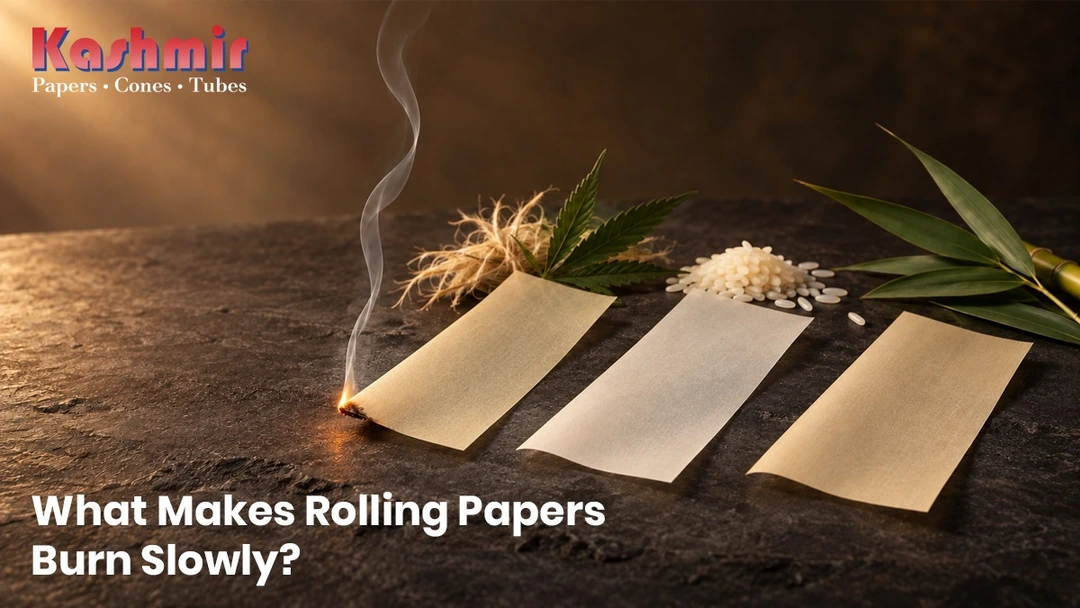
What Makes Rolling Papers Burn Smoothly and Slowly?
A rolling paper that burns too quickly can make a session feel rushed. An uneven burn can be just as frustrating, especially when one side of the paper moves faster than the other.
So, what actually creates a slower, smoother burn?
It isn’t just one thing. The paper’s thickness and material matter, but so do the way the roll is packed, the amount of airflow through it, moisture, and how evenly it is lit.
If you’re comparing the best slow burning rolling papers, these are the factors that matter most.
What Makes a Rolling Paper Burn Slowly?
A rolling paper’s burn rate starts with the paper itself.
Thin, lightweight papers put less paper into the roll than heavier sheets. The material and construction of the sheet also influence how it burns once lit.
But the paper doesn’t burn in isolation. The contents inside it affect the burn as well.
If the roll is packed unevenly, air can move through some areas more easily than others. One side may then burn faster, creating the uneven burn often called canoeing or running.
A consistently packed roll helps the paper and its contents burn together rather than allowing the flame to race down one side.
That means a slow burn is really the result of two things working together: the construction of the rolling paper and the consistency of the finished roll.
How Rolling Paper Material Influences the Burn
Hemp, rice, bamboo, and other paper fibers have different physical characteristics. Those differences affect how thin a sheet can be made, how it handles, and how it behaves during a burn.
For this topic, though, the important question isn’t which material is universally best. It’s what each material contributes to burn behavior.
Hemp Rolling Papers
Hemp fibers can produce papers that are lightweight while still having enough body and texture to handle comfortably.
That combination can be useful for maintaining a consistent roll. When the paper is shaped and packed evenly, the burn has a better chance of progressing evenly as well.
Kashmir’s Organic Hemp papers, for example, use lightweight, unbleached hemp sheets and are specifically described as supporting a slow, even burn.
Rice Rolling Papers
Rice papers are known for being especially thin and lightweight.
Because the sheet itself contributes relatively little paper material to the roll, rice papers are often chosen by people looking for a slow-burning, minimal-paper option.
Their thinness also makes the roll itself important. A delicate sheet needs to be handled and packed consistently so that uneven airflow doesn’t interfere with the burn.
Bamboo Rolling Papers
Bamboo fibers can be made into thin rolling papers while providing a different feel from very delicate rice sheets.
For burn performance, the same basic principle applies: the material matters partly because of the type of sheet it allows the manufacturer to produce.
Rather than treating bamboo, hemp, or rice as a guarantee of a certain burn speed, look at the finished paper, especially its weight and thickness.
Why Paper Thickness Matters
Thickness has a direct relationship with how much paper is actually burning.
A thicker sheet puts more paper material around the contents, while a thin or ultra-thin sheet reduces that amount. This is one reason lightweight and ultra-thin constructions are commonly used for papers designed around a slower, less paper-heavy burn.
Kashmir’s Ultra Thin 1¼ papers, for example, use a lightweight unbleached construction that the product specification describes as providing a slow and even burn.
Thinness isn’t the whole story, though.
An ultra-thin paper wrapped around an unevenly packed roll can still burn poorly. Likewise, simply choosing the lightest sheet available won’t correct gaps, loose sections, or uneven airflow inside the roll.
Think of paper thickness as one part of the burn—not a shortcut to getting every roll right.
How Packing and Airflow Affect an Even Burn
This is where the rolling technique starts to matter as much as the paper.
Air needs to move through the roll, but it should move through it consistently.
A section that’s packed much more loosely than the rest creates a different path for airflow. If one side has more open space, that area can burn differently from a denser section beside it.
Packing too tightly creates another problem: restricted airflow.
The goal is a roll with reasonably consistent density from one end to the other. It shouldn’t have obvious loose pockets or sections compressed much more tightly than everything around them.
A slow-burning paper can support a steady burn, but it can’t completely compensate for an unevenly packed roll.
Moisture Can Change the Way a Paper Burns
Rolling papers are thin, absorbent materials, so their condition matters.
A paper that has picked up excess moisture can become harder to handle and may not burn as consistently. At the other extreme, a sheet that has become unusually dry or brittle can be more difficult to roll without damage.
The contents of the roll matter here as well. Significant differences in moisture can affect how consistently the contents burn alongside the paper.
Keeping rolling papers protected from excessive humidity and moisture helps preserve the condition they were designed to have.
An Even Light Helps Set the Burn
The beginning of the burn can influence what happens next.
If one edge catches while another remains largely unlit, the burn starts unevenly. Once that difference develops, one side can continue moving ahead of the other.
An even initial light gives the circumference of the roll a more consistent starting point.
This won’t correct an badly packed roll, but when the paper and packing are already consistent, an even start helps them work as intended.
So, What Creates a Slow and Smooth Burn?
There isn’t one feature responsible for it.
A smooth, slow burn comes from several factors working together:
- Lightweight paper limits the amount of paper material being burned.
- Paper material and construction influence the characteristics of the finished sheet.
- Consistent packing reduces loose pockets and uneven density.
- Balanced airflow helps the roll burn at a steadier rate.
- Proper storage helps keep the paper in good condition.
- An even initial light gives the burn a consistent starting point.
This also explains why searching for the best slow burning rolling papers based only on material can be misleading.
Hemp, rice, bamboo, and ultra-thin papers can each be made for slow-burning performance. What matters is how the finished paper is constructed and how it works as part of the completed roll.
Kashmir’s own rolling-paper range includes lightweight hemp and ultra-thin options specifically described as producing slow, even burns. The same principle still applies once they’re in your hands: good paper provides the foundation, while consistent packing and airflow help maintain the burn.
A slow, smooth burn isn’t created by one feature printed on a package. It’s what happens when the paper, the roll, and the airflow work together.