
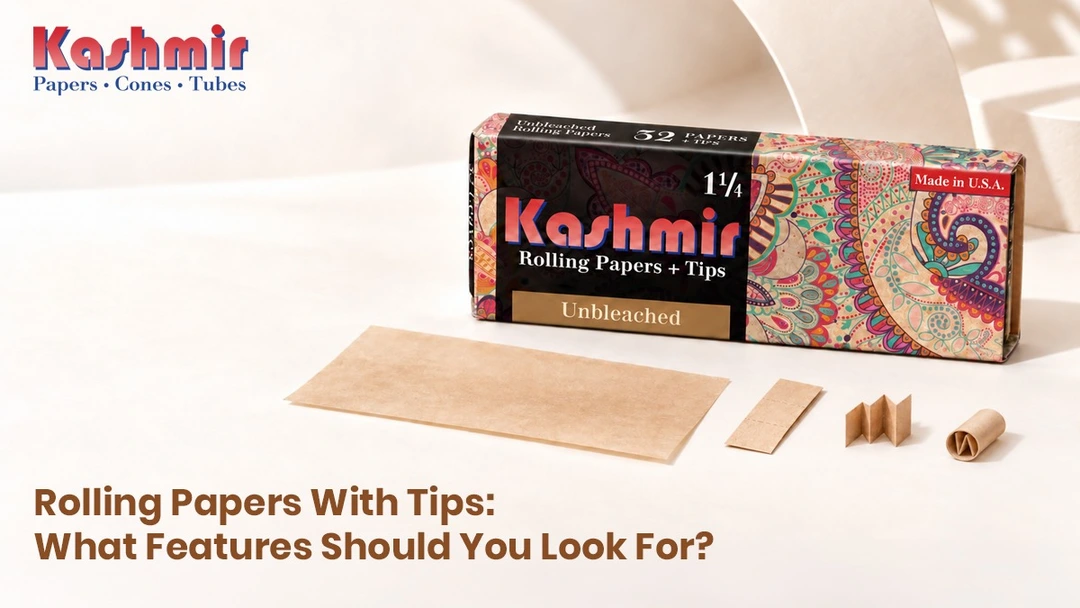
Rolling Papers With Tips: What Features Should You Look For?
A pack that combines rolling papers and tips can simplify what you need to carry, but convenience alone doesn’t tell you whether it’s the right paper for you. The paper material, thickness, size, and tip construction still matter.
If you’re comparing rolling paper with tips, it helps to look at the two components separately. A paper should have the handling characteristics you prefer, while the tip should provide enough structure for the finished roll.
Here’s what to check before choosing a pack.
What Are Rolling Papers With Tips?
Rolling papers with tips are packs that include rolling sheets and paper tips together. Instead of buying or carrying two separate packs, both components are available in one package.
The tip, sometimes called a paper tip or filter tip, is placed at one end of the roll to give that end more structure and create a defined mouthpiece.
There’s an important terminology distinction here. A paper tip isn’t necessarily a filtration device in the same sense as a manufactured filter designed to remove particular substances from smoke.
Many rolling paper filter tips are simply pieces of paperboard or similar material folded or rolled into shape. Unless a manufacturer specifically documents filtration performance, it’s more accurate to call them tips rather than claim that they filter smoke.
Why Use Filter Tips?
The main purpose of a paper tip is structural.
Without one, the open end of a roll can flatten, become loose, or allow small pieces of material to reach the mouth. A properly shaped tip creates a firmer end and can make the finished roll easier to handle.
Tips can help with:
- Structure: They provide support at the mouth end of the roll.
- Shape: A tip gives you a consistent starting point when forming the paper.
- Handling: The firmer end can make the finished roll easier to hold.
- Keeping loose material back: The folded or rolled tip creates a physical barrier that can help prevent small particles from reaching the mouth.
The word “filter” can cause confusion, though. A standard paper tip shouldn’t automatically be assumed to reduce harmful substances or make smoke safer.
Its primary role is mechanical: shape, structure, and handling.
Paper + Tip vs. Separate Tips
Buying papers with tips in the same pack and buying each component separately can both work. The practical difference comes down to convenience and choice.
| Feature | Papers With Tips | Papers + Separate Tips |
| Convenience | Both are kept together | Requires two packs |
| Portability | Fewer separate items to carry | Takes slightly more organization |
| Paper choice | Limited to papers offered in the combined pack | Wider freedom to mix products |
| Tip choice | Included tip style | Choose tip size/material separately |
| Matching sizes | Often intended to work together | User needs to select suitable sizes |
A combined pack makes sense if you already like both the included paper and tip.
Separate packs offer more flexibility. You might prefer one type of rolling paper but want a different width, thickness, or style of tip.
Neither format is inherently better. The useful question is whether the included components match how you prefer to roll.
Hemp, Rice and Unbleached Options
Once you’ve decided whether you want included tips, look at the paper itself.
Hemp Rolling Papers With Tips
Hemp rolling papers with tips combine hemp-based rolling sheets with tips in the same pack.
Hemp papers are available in different thicknesses and constructions. Many have some texture, which can provide useful grip while rolling, although the exact feel varies between products.
If you’re considering hemp, check the finished paper’s thickness, dimensions, and other specifications rather than assuming all hemp papers handle the same way.
Rice Rolling Papers
Rice-based papers are commonly associated with thin, lightweight sheets. That can appeal to people who prefer less paper material around the roll.
Thin papers can also be more delicate to handle, so paper weight should be considered alongside your rolling technique.
If a rice-paper pack includes tips, check the specifications of both components rather than assuming the tip is made from the same material as the rolling sheet.
Unbleached Rolling Papers
“Unbleached” describes processing rather than a separate fiber category.
An unbleached rolling paper can be made using different fibers. The term generally indicates that the paper hasn’t undergone the bleaching process used to produce a whiter sheet.
That distinction means hemp, rice, bamboo and unbleached shouldn’t always be treated as four equivalent material choices. A paper can, for example, be both hemp-based and unbleached.
It’s a small distinction, but a useful one when reading product labels.
Choosing the Right Size
A convenient paper-and-tip pack still needs to be the right size for what you’re rolling.
Rolling papers are available in several formats, and familiar labels can include sizes such as 1¼ and King Size. Exact dimensions can vary by manufacturer, so check measurements when size is particularly important.
Tip width matters as well.
The tip should work comfortably with the width and intended shape of the rolling paper. A tip that’s awkwardly proportioned for the sheet can make shaping the roll more difficult.
Consider three things together:
Paper length and width: These determine the available rolling area.
Tip dimensions: The tip needs to suit the intended finished shape.
Amount being rolled: Using a much larger sheet than necessary simply adds paper you don’t need.
Pack quantity is another specification worth checking. The number of papers and number of tips included aren’t necessarily something you should assume from the package size alone.
Rolling Papers With Tips From Kashmir
For someone searching for the best rolling papers with tips, there isn’t a meaningful universal winner. The useful comparison is whether the paper-and-tip combination fits your preferences.
Start with the paper. Consider its material, thickness, dimensions, texture, and construction.
Then look at the included tips. Check their dimensions and design, and make sure they’re appropriate for how you intend to use the papers.
Kashmir offers rolling-paper products across different materials, sizes, and formats. Where papers and tips are offered together, the advantage is straightforward: the components are kept in one convenient pack.
That convenience shouldn’t replace checking the specifications.
A good rolling paper with tips setup is one where you would be comfortable choosing both components individually anyway. If you like the paper but not the included tip—or the other way around, separate packs may give you more flexibility.
Focus on those practical details rather than a “best” label, and it’s much easier to choose a paper-and-tip combination that fits the way you prefer to roll.