
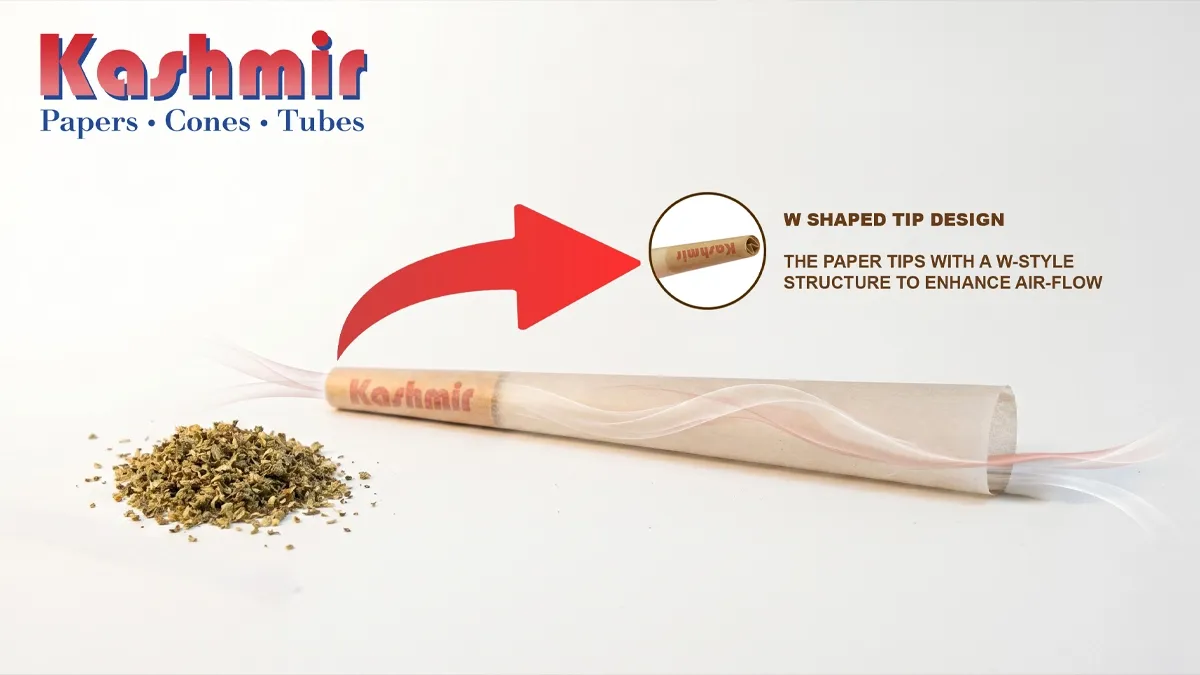
Fix Airflow Problems in Pre Rolled Cones: Simple Tricks for a Perfect Draw
Airflow issues in pre rolled cones are, by a wide margin, the most common complaint among people who use pre rolled cones, and most of them come from one of three things: grind too fine, pack too dense, or a blocked filter. The good news is that almost every single one of them is fixable with the right knowledge.
This guide breaks down the five real causes of tight draws, shows you how to fix them, including cones you’ve already packed, and explains what to look for in cone paper that makes everything easier from the start.
The 5 Real Causes of Tight and Clogged Pre Rolled Cones
1. Grind That’s Too Fine
This is usually the problem. If your grind is too fine, everything packs together like dust and chokes off airflow. That’s what causes that tight, frustrating pull. What you want is a light, fluffy texture, more like dry oregano than powder.
2. Packing Too Tight
Even with the right grind, packing too hard can ruin the draw. One push makes it so tight that the air cannot move through that easily. The recommended alternative is to layer small amounts at a time, adding a small amount and gently compacting between layers. When you squeeze the cone, it should feel firm.
3. A Blocked or Compressed Filter
The filter is what keeps air flowing through the mouthpiece. If loose material gets pushed into it while packing, or it gets bent out of shape, airflow gets restricted fast.
Take a quick check at the filter before packing to ensure that it is clear and in the correct shape. Also, when tamping, press vertically, not at an angle to the tip where material is being pushed.
4. Herb That’s Too Dry
Overly dry herb crumbles into dust during grinding and compresses into a plug. The fix is storage, not technique: keep herbs in an airtight container with a two-way humidity pack set to 58–62% RH. At that moisture level, it grinds consistently and packs without clumping or powdering.
5. Low-Quality Cone Paper
The issue might not be the way you packed it; it might be the cone itself. Lower quality cones may not burn uniformly due to the varying thickness of the paper in the cone, and excessive glue around the seam would affect the flow.
If you pack the cone right, but still have a poor draw, this may be due to a low quality cone. High-quality natural fiber cones are easier to make and burn more evenly, providing a smoother and more predictable pull through the cone.
How to Fix a Tight Cone in Under a Minute
Step 1: Dry Pull First, Always
Before lighting anything, draw slowly on the unlit cone. You want slight resistance, like sipping water through a straw. If it feels like sucking concrete, it’s too tight. If there’s almost no resistance, it’s too loose. Catching this takes three seconds and saves the entire session.
Step 2: Loosen a Tight Cone With a Packing Stick
If the dry pull is too tight, don’t toss it. Use a packing stick (or a bamboo skewer) inserted from the open end and stir lightly to loosen any compacted areas near the top and the shoulders.
Probe lightly; you’re disrupting compression, not excavating. Test again with a dry pull. If it’s still hit-like-concrete tight, unpack the top third, re-grind coarser, and repack in layers.
Step 3: Clear a Clogged Filter
If the blockage is at the mouthpiece and not along the body, put a clean toothpick in the mouth and then twist it slightly, and pull it back out of the mouth. This forms a microscopic channel inside the crutch, but does not destroy the crutch.
Test the draw. Most plugged filters are fixed in under 20 seconds.
Step 4: Fix a Canoeing Cone Mid-Session
One side burning faster than the other signals poor airflow balance. Take one damp finger and put a little moisture on the side that burns faster. Turn the cone so that the slower side faces upwards, causing heat to rise, and bringing that edge to the heat quicker.
Quick Fix Guide
| Symptom | Most Likely Cause | Fix |
|---|---|---|
| Tight draw from the start | Grind too fine / overpacked | Loosen with packing stick; re-grind coarser |
| Cone keeps going out | No airflow mid-section | Poke a channel; rotate while drawing |
| Blocked right at the filter | Debris in crutch | Clear with toothpick from mouth end |
| One side burns faster | Uneven pack density | Moisten fast side; rotate; repack evenly next time |
| Harsh, thin smoke | Herb too dry or powder-fine | Use humidity pack; grind coarser |
| Paper tears while packing | Low-quality cone paper | Switch to natural-paper cones |
Pack It Right the First Time
The best fix is a pack that doesn’t need fixing:
- Grind to a medium, fluffy texture, like coarse grains, not dust.
- Hold the cone upright and add a small pinch at a time.
- Tap the filter end on a flat surface after each addition to settle the herb naturally.
- Tamp straight down, light pressure, rotate between tamps so density is even.
- Pack slightly firmer near the filter, looser near the top.
- Stop filling about a quarter inch from the top.
- Do your dry pull. If air moves freely with light resistance, you’re ready.
Does the Cone You Choose Affect Airflow?
Yes, more than most people account for. Cone paper plays a major role in airflow optimization, even when your packing technique is solid. Cheap, inconsistent paper fights you before you’ve added a single pinch.
Kashmir’s pre rolled cones are made from a range of clean, natural papers; each with distinct burn and airflow characteristics:
- Organic Hemp Cones — 100% unbleached organic hemp fiber. Thicker paper will maintain its density when it is placed in the box, making it easier to get consistent airflow into it. Available in 1¼ and King Size.
- Bamboo Cones — Thin, strong, and chlorine-free. Burns clean without hot spots, which is why many smokers find these give a particularly smooth draw.
- Ultra Thin Cones — Minimum paper interference means a lighter draw. Use a slightly firmer tamp than usual to compensate for the delicate paper.
- Unbleached Cones — The natural classic. Consistent burn, clean grey ash, steady airflow from first light to finish.
- Flavored Cones — Available in Strawberry, Blueberry, Mango, and Grape. Light flavor infusion that doesn’t affect paper density or draw.
- HotRod Cones — Chlorine-free paper, consistent construction, sturdy filter tips. Good choice when you want precise control over fill size and draw resistance.
Still fixing clogged draws with toothpicks? Start with cones that don’t create the problem. Shop Pre Rolled Cones at kashmir420.
FAQs
Why is my pre rolled cone so tight and hard to pull?
Almost always a grind issue. Fine, powdery herb compacts into a near-solid plug. Grind coarser, pack in layers, and do a dry pull before lighting.
How do I fix a cone that won’t draw at all?
Probe from the open end with a packing stick to break up dense pockets. If the block is at the filter, a toothpick from the mouth end usually clears it in under 20 seconds.
Why does my cone keep going out?
Most probably because it was packed too tightly in the mid-section. Without airflow, there is insufficient oxygen to keep the cone burning. Break it up using a packing stick and then unpack the top third, and repack again more gently. If the herb is wet, lay it flat for 10 minutes before packing.
What grind size is best for pre rolled cones?
Medium, fluffy, and coarse, not powder. Fine dust clogs airflow channels. Chunky pieces burn unevenly. A quality multi-blade grinder produces consistent results that translate directly into better draws.
Does cone paper actually affect how it draws?
Significantly. Consistent paper porosity allows even airflow as the cone burns. Uneven or cheap paper creates hot and cold spots that disrupt both burn and draw. Natural hemp, bamboo, and unbleached papers made to tight specs give you a predictable draw every time.